


Warehousing & Storage Apprenticeship
Warehousing & Storage Apprenticeship
At TTS we offer a Level 2 Warehousing and Storage apprenticeship.
A warehousing and storage apprenticeship is a training scheme that leads to a career in the logistics sector, within a manufacturing/engineering factory, a storage facility belonging to a haulage company, or a retail distribution warehouse.
Candidates will need to be working in a warehouse facility where they are picking, packing and/or distributing goods to customers.
The day-to-day role of warehousing/storage operatives includes everything related to goods coming into and going out of a warehouse or storage facility.
Warehouse Operatives may be involved in:
- Taking deliveries of goods or raw materials
- Checking for damage or missing items
- Loading and unloading deliveries form trucks and moving stock around the warehouse using lifting equipment (such as fork trucks or pallet trucks)
- Placing goods into the correct storage locations
- Packing and wrapping goods into boxes and crates ready for dispatch
- Order ‘picking’ which involves selecting all the things on a customer’s order from the various locations within the warehouse
- Stock management such as re-ordering stock and stock taking (counting stock held)
- Processing returned goods
Depending on the warehouse and the individual job requirements, some warehouse workers will have responsibility for one or some of the items on the list above or may have a role that encompasses all of them.
The Warehousing & Storage Apprenticeship Programme Covers:
- Developing working relationships
- Health, safety and security at work
- Processing orders in logistics
- Assembling, picking and wrapping goods
- Placing goods into storage
- Hygiene in the workplace
- Use of equipment to move and handle goods
- Checking and managing stock levels
- Operating equipment
- Food safety
- Safety and security of hazardous goods
- Processing returned goods
- Recycling
- Customer service in logistics
- Additional areas to suit each individual company’s requirements
Once the level 2 qualification is completed, and you are in a suitable role, you can progress to a level 3 logistics operations apprenticeship.

Otherwise known as
- Warehouse Operative
- Warehouse Assistant
- Warehouse Picker/Packer
- Warehouse Coordinator
- Stock Controller
- Materials Handling Operative
- Inventory Clerk
Frequent Questions
The entry requirement for this warehousing & storage apprenticeship is typically GCSEs at Grades A* – D (9 – 3) including English and Maths.
Transport Training Services has an impressive training centre including modern conference facilities; a variety of fully equipped training rooms and computer suites; a vehicle manoeuvring area; vehicle maintenance workshops and a vehicle body repair workshop which houses a paint booth and paint mixing facility.
Take the Virtual Tour:
Our existing and past female apprentices and the women that work in the transport, logistics and automotive sectors tell us that they are not treated any differently to their male colleagues.
They consistently tell us that they enjoy being part of the team, they are treated fairly and equally and they love the banter that comes with being part of a mixed team!
During your apprenticeship you will be fully supported by both your course tutors and our dedicated Careers Development Officer. Our Careers Development Officer will be with you every step of the way to ensure you are integrating successfully into your workplace and to provide you with regular feedback on your progress. Your Careers Development Officer is also the link between you and your employer and is there to make sure any issues, on either side, are resolved quickly.
If you have any doubts or questions about being a female in the transport or motor industries, join our Facebook group and ask one of our ‘Women in Wheels’ – a group of friendly, inspiring and dedicated women who are either existing apprentices, are recently graduated apprentices or are experienced women working in a range of role across the sectors.
Women in Wheels NI Facebook Group: www.facebook.com/groups/womeninwheelsni
We know that the transport/logistics and motor sectors have a lot to offer. Aside from the excitement, variety, problem-solving and technology involved, both sectors are in high demand and so provide good long-term job prospects.
The motor industry employs 823,000 people and contributes £18.6 billion to the UK economy.
Due to the highly rural nature of many parts of NI, transport by car is the only viable option for travel and commuting. Without the motor sector we would not have cars that are safe and legal to drive.
The road transport industry employs 2.7 million people and contributes £124 billion to the UK economy.
Everything that comes into or goes out of Northern Ireland travels by road, whether it’s clothes, food, fuel or your online orders, so the career opportunities are vast and diverse.
Transport workers are essential in our everyday lives. The recent covid-19 pandemic showed the importance of transport and logistics and demonstrates that even when the economy dips, transport stays strong and in demand.
1.2m vehicles licensed in NI – all need maintained/repaired
150,000 goods vehicles and 3,400 buses all need drivers
A combination of an ageing workforce, lack of investment in apprentices after the last UK recession, a lack of diversity and the impact of Brexit means our sectors are facing a shortfall of talent across all areas. This means qualified transport and automotive apprentices, once qualified, are in high demand!
Once you enter a career in transport or automotive, there is plenty of opportunity for growth and advancement. Find out about the career path opportunities here.
Apprentices are also crucial in bridging the gap in future technologies in these sectors. TTS apprentices will increasingly bring skills that may be lacking in transport and automotive businesses in Northern Ireland today. We already train apprentices in hybrid and electric vehicle technology and are already looking to the future of hydrogen power, for example.
Additionally, women now account for 35% of registered car keepers in the UK and so are increasingly involved in car buying and servicing decisions. Many women feel more comfortable interacting with and asking questions of female mechanics and service advisors, so employers have a desire to hire more women.
TTS is consistently praised for its support of its apprentices. We have a dedicated Careers Development Officer to provide ongoing pastoral care to ensure you are developing well and integrating successfully into your workplace, and to provide you with regular feedback on your progress.
Your Careers Development Officer is also the link between you and your employer and is there to make sure any issues, on either side, are resolved quickly.
Proof of the quality of support available is the large number of employers who themselves came through an apprenticeship with TTS and want a similar, quality experience for the staff they employ.
Apprenticeship Application
Ignite your career with a motor industry apprenticeship. Click the button below to apply.
View all apprenticeships
TTS offers a wide range of apprenticeships to suit all needs so we are sure to have something to suit you.
Remember we are always here to help so don’t hesitate to get in touch with any question or query.

 .
.


Logistics Operations Apprenticeship
Logistics Operations Apprenticeship
Our Level 3 Logistics Operations Apprenticeship builds upon the skills and knowledge developed through the Level 2 Warehousing and Storage apprenticeship.
A logistics operations apprenticeship is a training scheme that leads to a career within the logistics sector, primarily dealing with the planning of transportation of goods from one location to another. This role is a critical part of the supply chain and helps to ensure that manufacturers have all of the ingredients or components required to make their products; that our shops, restaurants and hotels are fully stocked; and that homes across the country receive their letters and parcels on time.
The Logistics Operations Apprenticeship Programme Covers:
- Health, safety and security at work
- Optimising the use of logistics resources
- Making an effective contribution to a business in the logistics sector
- Improving performance in logistics operations
- Allocating and checking work in your team in logistics operations
- Providing leadership for your team in logistics operations
- Maintaining the safety and security of hazardous goods and materials in logistics
- operations
- Minimising the environmental impact of logistics operations
- Supervising the receipt, storage or dispatch of goods
- International road transport operations
- Scheduling logistics operations to meet customer requirements
- Arranging the transportation of goods using multiple transport modes
- Applying technology in logistics operations
- Ensuring compliance with legal, regulatory, ethical and social requirements in logistics operations
- Responding to problems in logistics operations
- Contributing to the provision of customer service in logistics operations

Otherwise known as
- Transport Planner
- Logistics Planner
- Logistics Coordinator
- Transport Controller
- Logistics Controller
- Operations Load Planner
- Freight Coordinator
- Logistics Administrator
- Transport Administrator
- Transport Operations Clerk
Frequent Questions
-
If you are not progressing to this apprenticeship having completed the level 2 warehousing and storage apprenticeship, the entry requirement for this logistics operations apprenticeship is typically GCSEs at Grades A* – C (9 – 4) including English and Maths.
Transport Training Services has an impressive training centre including modern conference facilities; a variety of fully equipped training rooms and computer suites; a vehicle manoeuvring area; vehicle maintenance workshops and a vehicle body repair workshop which houses a paint booth and paint mixing facility.
Take the Virtual Tour:
Our existing and past female apprentices and the women that work in the transport, logistics and automotive sectors tell us that they are not treated any differently to their male colleagues.
They consistently tell us that they enjoy being part of the team, they are treated fairly and equally and they love the banter that comes with being part of a mixed team!
During your apprenticeship you will be fully supported by both your course tutors and our dedicated Careers Development Officer. Our Careers Development Officer will be with you every step of the way to ensure you are integrating successfully into your workplace and to provide you with regular feedback on your progress. Your Careers Development Officer is also the link between you and your employer and is there to make sure any issues, on either side, are resolved quickly.
If you have any doubts or questions about being a female in the transport or motor industries, join our Facebook group and ask one of our ‘Women in Wheels’ – a group of friendly, inspiring and dedicated women who are either existing apprentices, are recently graduated apprentices or are experienced women working in a range of role across the sectors.
Women in Wheels NI Facebook Group: www.facebook.com/groups/womeninwheelsni
We know that the transport/logistics and motor sectors have a lot to offer. Aside from the excitement, variety, problem-solving and technology involved, both sectors are in high demand and so provide good long-term job prospects.
The motor industry employs 823,000 people and contributes £18.6 billion to the UK economy.
Due to the highly rural nature of many parts of NI, transport by car is the only viable option for travel and commuting. Without the motor sector we would not have cars that are safe and legal to drive.
The road transport industry employs 2.7 million people and contributes £124 billion to the UK economy.
Everything that comes into or goes out of Northern Ireland travels by road, whether it’s clothes, food, fuel or your online orders, so the career opportunities are vast and diverse.
Transport workers are essential in our everyday lives. The recent covid-19 pandemic showed the importance of transport and logistics and demonstrates that even when the economy dips, transport stays strong and in demand.
1.2m vehicles licensed in NI – all need maintained/repaired
150,000 goods vehicles and 3,400 buses all need drivers
A combination of an ageing workforce, lack of investment in apprentices after the last UK recession, a lack of diversity and the impact of Brexit means our sectors are facing a shortfall of talent across all areas. This means qualified transport and automotive apprentices, once qualified, are in high demand!
Once you enter a career in transport or automotive, there is plenty of opportunity for growth and advancement. Find out about the career path opportunities here.
Apprentices are also crucial in bridging the gap in future technologies in these sectors. TTS apprentices will increasingly bring skills that may be lacking in transport and automotive businesses in Northern Ireland today. We already train apprentices in hybrid and electric vehicle technology and are already looking to the future of hydrogen power, for example.
Additionally, women now account for 35% of registered car keepers in the UK and so are increasingly involved in car buying and servicing decisions. Many women feel more comfortable interacting with and asking questions of female mechanics and service advisors, so employers have a desire to hire more women.
TTS is consistently praised for its support of its apprentices. We have a dedicated Careers Development Officer to provide ongoing pastoral care to ensure you are developing well and integrating successfully into your workplace, and to provide you with regular feedback on your progress.
Your Careers Development Officer is also the link between you and your employer and is there to make sure any issues, on either side, are resolved quickly.
Proof of the quality of support available is the large number of employers who themselves came through an apprenticeship with TTS and want a similar, quality experience for the staff they employ.
Apprenticeship Application
Ignite your career with a motor industry apprenticeship. Click the button below to apply.
View all apprenticeships
TTS offers a wide range of apprenticeships to suit all needs so we are sure to have something to suit you.
Remember we are always here to help so don’t hesitate to get in touch with any question or query.
.

Customer Service Apprenticeship
Customer Service Apprenticeship
A customer service apprenticeship is a training scheme that teaches the skills required to provide excellent customer service. These skills can be applied to jobs in almost any sector so the career possibilities are endless.
The role of a customer services professional varies depending on the sector and on what the organisation does but primarily the role includes:
- Greeting and assisting customers
- Identifying customer needs, answering questions and dealing with complaints
- Liaising with other colleagues to arrange resolution of customer queries or complaints
- Communicating with customers to keep them up-to-date in various situations
A customer service professional will typically be on the front line of an organisation’s business activities – either face-to-face, over the phone or using some form of online support – and will be responsible for ensuring a positive experience for the customer.
Candidates need to be employed in a customer service role to complete this apprenticeship.
The Level 2 Customer Service Apprenticeship Programme Covers:
- Delivering customer service
- Understanding customers
- Principles of customer service
- Understanding employer organisations
- Managing personal performance and development
- Resolving customer problems
- Communication with customers
- Employment legislation
The Level 3 Customer Service Apprenticeship Programme Covers:
- Principles of business
- Understanding customers and customer retention
- Resolving customer problems
- Organising and delivering customer service
- Managing personal and professional development
- Understanding the customer service environment
- Leadership in customer service
To participate in the Level 3 Customer Service Apprenticeship, the learner must be in a supervisory role and assisting others to provide a high level of customer service.
Please note: We also offer separate customer service focused Parts Advisor and Service Advisor Apprenticeships.

Otherwise known as
- Supervisor
- Shift Supervisor
- Foreperson
- Workshop Chargehand
- Junior Manager
- Direct Line Manager
- First Line Manager
Frequent Questions
This apprenticeship will be assessed using a variety of methods, including:
- Initial discussion on role
- Professional discussions to confirm written work authenticity
- At least two workplace observations (e.g. one-to-one and group meeting)
- Witness statements from colleagues above and below
- Examination of workplace evidence
- Professional discussions to close off units
- Digital assessments with an e-portfolio
Transport Training Services has an impressive training centre including modern conference facilities; a variety of fully equipped training rooms and computer suites; a vehicle manoeuvring area; vehicle maintenance workshops and a vehicle body repair workshop which houses a paint booth and paint mixing facility.
Take the Virtual Tour:
TTS is consistently praised for its support of its apprentices. We have a dedicated Careers Development Officer to provide ongoing pastoral care to ensure you are developing well and integrating successfully into your workplace, and to provide you with regular feedback on your progress.
Your Careers Development Officer is also the link between you and your employer and is there to make sure any issues, on either side, are resolved quickly.
Proof of the quality of support available is the large number of employers who themselves came through an apprenticeship with TTS and want a similar, quality experience for the staff they employ.
You can find out more about our pastoral care by downloading our Apprentice Pastoral Care Handbook here: Download PDF.
Apprenticeship Application
Ignite your career with a motor industry apprenticeship. Click the button below to apply.
View all apprenticeships
TTS offers a wide range of apprenticeships to suit all needs so we are sure to have something to suit you.
Remember we are always here to help so don’t hesitate to get in touch with any question or query.
.

Team Leading Apprenticeship
Team Leading Apprenticeship
This level 2 team leading apprenticeship is designed for supervisors or first-line managers and provides practical knowledge and skills to strengthen leadership in an existing role or to advance the learner’s management career.
To participate in this apprenticeship, candidates must be managing people currently and they must hold team and one-to-one meetings.
The Team Leading Apprenticeship Programme Covers:
- Managing personal performance and development
- Leading and managing a team
- Principles of team leading
- Managing team performance
- Understanding business
- Communicating work related information
- Employment legislation, including employee rights and responsibilities
A range of optional units are available to choose from:
- Performance management
- Regulations and legislation
- Managing meetings
- Health & safety
- Resolving complaints

Otherwise known as
- Supervisor
- Shift Supervisor
- Foreperson
- Workshop Chargehand
- Junior Manager
- Direct Line Manager
- First Line Manager
Frequent Questions
The big distinction between the two apprenticeships is that Team Leaders lead and Managers manage. The team leaders take instruction from their managers and bring their team along with them. The managers should be the ones making the decisions, thinking strategically for the business and communicating to their Team Leaders.
The management apprenticeship would be ideal for someone new into a management role, or someone who is in the role but needs training to improve competency. Invariably, most managers move upwards into the role with little or no training, so the apprenticeship will equip them with the skills required to be fully competent.
For the team leading apprenticeship, the learner must be leading staff. For the management apprenticeship, the manager must be managing staff and/or managing a process.
For the Management Apprenticeship:
The Management apprenticeship is for those that already work in a management or deputy management position. Candidates must be managing a process and/or staff.
Candidates can be ‘acting up’ temporarily into a management role.
For the Team Leading Apprenticeship:
The Team Leading Apprenticeship is for those that already work in some form of team leading capacity. Candidates must be managing people currently and they must hold team and one-to-one meetings.
Candidates can be ‘acting up’ temporarily into a team leading role.
This apprenticeship will be assessed using a variety of methods, including:
- Initial discussion on role
- Professional discussions to confirm written work authenticity
- At least two workplace observations (e.g. one-to-one and group meeting)
- Witness statements from colleagues above and below
- Examination of workplace evidence
- Professional discussions to close off units
- Digital assessments with an e-portfolio
Transport Training Services has an impressive training centre including modern conference facilities; a variety of fully equipped training rooms and computer suites; a vehicle manoeuvring area; vehicle maintenance workshops and a vehicle body repair workshop which houses a paint booth and paint mixing facility.
Take the Virtual Tour:
TTS is consistently praised for its support of its apprentices. We have a dedicated Careers Development Officer to provide ongoing pastoral care to ensure you are developing well and integrating successfully into your workplace, and to provide you with regular feedback on your progress.
Your Careers Development Officer is also the link between you and your employer and is there to make sure any issues, on either side, are resolved quickly.
Proof of the quality of support available is the large number of employers who themselves came through an apprenticeship with TTS and want a similar, quality experience for the staff they employ.
Apprenticeship Application
Ignite your career with a motor industry apprenticeship. Click the button below to apply.
View all apprenticeships
TTS offers a wide range of apprenticeships to suit all needs so we are sure to have something to suit you.
Remember we are always here to help so don’t hesitate to get in touch with any question or query.
.

Management Apprenticeship
Management Apprenticeship
This level 3 management apprenticeship is designed for current managers who require upskilling in areas of their job to be fully competent.
To participate in this apprenticeship, candidates should be managing staff and/or managing processes.
The Management Apprenticeship Programme Covers:
- Managing personal and professional development
- Managing team performance
- Principles of business
- Principles of people management
- Principles of leadership and management
- Employment legislation, including employee rights and responsibilities
A range of optional units are available to choose from:
- Performance management
- Quality management
- Project management
- Strategic development
- Managing events

Otherwise known as
- Senior Manager
- Area Manager
- Department Manager
- Operations Manager
- Regional Manager
- Divisional Manager
- Head of Department
- General Manager
- Depot Manager
Frequent Questions
The big distinction between the two apprenticeships is that Team Leaders lead and Managers manage. The team leaders take instruction from their managers and bring their team along with them. The managers should be the ones making the decisions, thinking strategically for the business and communicating to their Team Leaders.
The management apprenticeship would be ideal for someone new into a management role, or someone who is in the role but needs training to improve competency. Invariably, most managers move upwards into the role with little or no training, so the apprenticeship will equip them with the skills required to be fully competent.
For the team leading apprenticeship, the learner must be leading staff. For the management apprenticeship, the manager must be managing staff and/or managing a process.
For the Management Apprenticeship:
The Management apprenticeship is for those that already work in a management or deputy management position. Candidates must be managing a process and/or staff.
Candidates can be ‘acting up’ temporarily into a management role.
For the Team Leading Apprenticeship:
The Team Leading Apprenticeship is for those that already work in some form of team leading capacity. Candidates must be managing people currently and they must hold team and one-to-one meetings.
Candidates can be ‘acting up’ temporarily into a team leading role.
This apprenticeship will be assessed using a variety of methods, including:
- Initial discussion on role
- Professional discussions to confirm written work authenticity
- At least two workplace observations (e.g. one-to-one and group meeting)
- Witness statements from colleagues above and below
- Examination of workplace evidence
- Professional discussions to close off units
- Digital assessments with an e-portfolio
Transport Training Services has an impressive training centre including modern conference facilities; a variety of fully equipped training rooms and computer suites; a vehicle manoeuvring area; vehicle maintenance workshops and a vehicle body repair workshop which houses a paint booth and paint mixing facility.
Take the Virtual Tour:
TTS is consistently praised for its support of its apprentices. We have a dedicated Careers Development Officer to provide ongoing pastoral care to ensure you are developing well and integrating successfully into your workplace, and to provide you with regular feedback on your progress.
Your Careers Development Officer is also the link between you and your employer and is there to make sure any issues, on either side, are resolved quickly.
Proof of the quality of support available is the large number of employers who themselves came through an apprenticeship with TTS and want a similar, quality experience for the staff they employ.
Apprenticeship Application
Ignite your career with a motor industry apprenticeship. Click the button below to apply.
View all apprenticeships
TTS offers a wide range of apprenticeships to suit all needs so we are sure to have something to suit you.
Remember we are always here to help so don’t hesitate to get in touch with any question or query.
.

Vehicle Sales Apprenticeship
Vehicle Sales Apprenticeship
A vehicle sales apprenticeship is a training scheme that leads to a career in sales/business development within the automotive sector. It could relate to selling new or used motorcycles, cars, vans, trucks, trailers or even agricultural or plant equipment. Generally, a vehicle sales professional will work in either a franchised or independent vehicle dealership.
This Apprenticeship programme will provide a range of skills used in a fast-moving sales environment, including how to quickly identify a customer’s needs, how to promote the features and benefits of vehicles and how to negotiate sales.
The role of a vehicle sales professional varies depending on the type and size of the organisation and on the product being sold, but primarily the role includes:
- Greeting customers in a showroom environment
- Identifying customer needs and advising them on the most suitable vehicle
- Arranging test drives
- Negotiating sale and trade-in prices
- Working out finance arrangements
- Processing orders and completing paperwork
- Liaising with other colleagues to arrange vehicle ordering and delivery
- Contacting potential new customers
In larger organisations you may work as part of a team, specialising in one aspect of selling. In smaller organisations you may be responsible for all aspects of vehicle sales.
Depending on the company, the job requirements will vary. In some organisations you will be responsible for one aspect of the sales process, whereas in others you could be responsible for wider activities such as keeping the cars clean or assisting with marketing the vehicles.
The Level 2 Vehicle Sales Apprenticeship Programme Covers:
- Brand, product and market awareness in the vehicle sales and supply business
- Complying with the legal requirements and regulations of vehicle sales
- Handling vehicle sales telephone enquiries
- Delivering a vehicle sales static presentation
- Conducting vehicle demonstration drives
- Managing customer relationships in a vehicle sales environment
- Handover of the vehicle to the customer
- Meeting and greeting vehicle sales customers
A range of optional units are available to choose from:
- Negotiating fleet and business buyer needs
- Constructing motor vehicle sales packages
- Automotive retail negotiation and sales techniques
- Promoting finance and insurance for vehicle sales
In addition to the units studied at Level 2, apprentices will complete the following units at Level 3:
- Self-management and administration in a vehicle sales environment
- Appraising vehicles for part-exchange
- Valuing vehicles for part-exchange
- Managing customer relationships in a vehicle sales environment
Each level will take approximately 12 – 18 months to complete.

Otherwise known as
- Truck/Commercial Vehicle Sales Advisor
- Truck/Commercial Vehicle Sales Executive
- Truck/Commercial Vehicle Salesperson
- Truck/Commercial Vehicle Sales Representative
- Business Development Advisor
- Business Development Executive
- Business Development Representative
Frequent Questions
Transport Training Services has an impressive training centre including modern conference facilities; a variety of fully equipped training rooms and computer suites; a vehicle manoeuvring area; vehicle maintenance workshops and a vehicle body repair workshop which houses a paint booth and paint mixing facility.
Take the Virtual Tour:
As with any new career, some basic knowledge of the job or the subject matter is advantageous but not essential.
Whilst having some basic understanding will set you off on a good grounding, the biggest asset you can bring to an apprenticeship is enthusiasm. Having an interest in your chosen career is a must.
As part of your apprenticeship we will teach you everything you need to know, including the basics.
Our existing and past female apprentices and the women that work in the transport, logistics and automotive sectors tell us that they are not treated any differently to their male colleagues.
They consistently tell us that they enjoy being part of the team, they are treated fairly and equally and they love the banter that comes with being part of a mixed team!
During your apprenticeship you will be fully supported by both your course tutors and our dedicated Careers Development Officer. Our Careers Development Officer will be with you every step of the way to ensure you are integrating successfully into your workplace and to provide you with regular feedback on your progress. Your Careers Development Officer is also the link between you and your employer and is there to make sure any issues, on either side, are resolved quickly.
If you have any doubts or questions about being a female in the transport or motor industries, join our Facebook group and ask one of our ‘Women in Wheels’ – a group of friendly, inspiring and dedicated women who are either existing apprentices, are recently graduated apprentices or are experienced women working in a range of role across the sectors.
Women in Wheels NI Facebook Group: www.facebook.com/groups/womeninwheelsni
We know that the transport/logistics and motor sectors have a lot to offer. Aside from the excitement, variety, problem-solving and technology involved, both sectors are in high demand and so provide good long-term job prospects.
The motor industry employs 823,000 people and contributes £18.6 billion to the UK economy.
Due to the highly rural nature of many parts of NI, transport by car is the only viable option for travel and commuting. Without the motor sector we would not have cars that are safe and legal to drive.
The road transport industry employs 2.7 million people and contributes £124 billion to the UK economy.
Everything that comes into or goes out of Northern Ireland travels by road, whether it’s clothes, food, fuel or your online orders, so the career opportunities are vast and diverse.
Transport workers are essential in our everyday lives. The recent covid-19 pandemic showed the importance of transport and logistics and demonstrates that even when the economy dips, transport stays strong and in demand.
1.2m vehicles licensed in NI – all need maintained/repaired
150,000 goods vehicles and 3,400 buses all need drivers
A combination of an ageing workforce, lack of investment in apprentices after the last UK recession, a lack of diversity and the impact of Brexit means our sectors are facing a shortfall of talent across all areas. This means qualified transport and automotive apprentices, once qualified, are in high demand!
Once you enter a career in transport or automotive, there is plenty of opportunity for growth and advancement. Find out about the career path opportunities here.
Apprentices are also crucial in bridging the gap in future technologies in these sectors. TTS apprentices will increasingly bring skills that may be lacking in transport and automotive businesses in Northern Ireland today. We already train apprentices in hybrid and electric vehicle technology and are already looking to the future of hydrogen power, for example.
Additionally, women now account for 35% of registered car keepers in the UK and so are increasingly involved in car buying and servicing decisions. Many women feel more comfortable interacting with and asking questions of female mechanics and service advisors, so employers have a desire to hire more women.
The first step is to complete an online application, which can be found here. When we receive and process your application, you will be invited to TTS to participate in a range of aptitude tests. Please note, any candidate under the age of 18 must be accompanied by an adult.
TTS has well-established business partnerships with the main employers in the transport and motor sectors in Northern Ireland. Current partners on the ApprenticeshipsNI programme include a variety of franchise brands including:
We also train apprentices for local franchise dealerships and independent employers and family businesses throughout Northern Ireland, such as:
- Charles Hurst Group
- Diamond Trucks
- Donnelly Group
- Downeys Cars
- Gus Commercials
- McMillan Specialist Cars
- John Mulholland Motors
- NI Trucks
- RK Trucks Centre
- Road Trucks
- Roadside Garages
- Shelbourne Motors
- TBF Thompson
- The Agnew Group
- The Country Garage
- TrustFord
- Wilsons of Rathkenny
- Wrights Accident Repair Centres
This is not an exhaustive list and as you can see covers the entire geography of Northern Ireland. We endeavour, as far as possible, to match apprentices to vacancies in their locality.
TTS is consistently praised for its support of its apprentices. We have a dedicated Careers Development Officer to provide ongoing pastoral care to ensure you are developing well and integrating successfully into your workplace, and to provide you with regular feedback on your progress.
Your Careers Development Officer is also the link between you and your employer and is there to make sure any issues, on either side, are resolved quickly.
Proof of the quality of support available is the large number of employers who themselves came through an apprenticeship with TTS and want a similar, quality experience for the staff they employ.
Nothing! Unlike most university courses, there are no fees associated with training during an apprenticeship. On the contrary, apprentices earn a decent wage from day one.
The apprentice minimum wage, which is set by the government and which changes at least every April, depends on:
• Your age
• The year of apprenticeship you are in
For those aged under 19 or those aged 19 or over who are in the first year of their apprenticeship, the minimum apprentice rate applies. If you are 19 or older, and have completed your first year of your apprenticeship, the National Minimum Wage applies for your age group.
You can find out more about legal apprenticeship wages here and national minimum wages here.
Whilst these are the minimum wages set by the government, TTS apprentices are employed by a local company in the motor/transport industry from day one and many of these employers choose to pay more than the minimum legal standard.
Certain types of apprenticeships also tend to command a higher rate. It is important to keep sight of the long-term goal when entering into an apprenticeship though. Transport and motor industry technical and driving professions are in high demand and offer excellent career prospects.
TTS normally starts new apprentices in September, mainly because this fits into the typical school-leaver schedule. The best time to look for an apprenticeship, therefore, is between January and June prior to the September that you wish to commence. Some employers start recruiting as early as Spring so the earlier you apply the more opportunities you will be able to be considered for.
Having said that, we often have demand from employers throughout the year for new apprentices, which we can accommodate because our apprenticeships are modular. This means you could start the apprenticeship later in the term and simply complete the modules in a different order, if we have sufficient numbers for a full class of late starters or spaces to fill on existing classes.
Unlike some other apprenticeship providers, you will work for your employer and attend TTS classes all year round. Most employer work experience is five days per week (Monday to Friday), with attendance at TTS in Nutts Corner being approximately one week every two months for training. At TTS, we find this ‘block release’ model to be beneficial compared with other schemes that operate on a weekly day release for college training, because you can get more done in five consecutive days than in five individual days. In our experience, employers also prefer the block release model because they find it easier to plan your workload.
Each apprentice attends our training centre for a unique blend of workshop practical tasks, classroom theory and e-learning. At TTS you will receive a minimum of 50% workshop practical training. Hours of attendance at TTS are 9am to 4pm (Monday-Thursday) and 9am to 3pm (Friday).
According to the Institute of the Motor Industry (IMI) an apprenticeship is “a work-based training programme that provides the learner with practical skills through on-the-job training combined with theoretical knowledge through off-the-job learning”.
A TTS apprenticeship is a three-year employment opportunity which provides paid work experience and nationally recognised qualifications.
Transport Training Services is a social enterprise focusing on apprenticeships and career development training specifically for the retail motor trade and transport industry in Northern Ireland. Backed by over 50 years’ experience as a leading, recognised transport training service provider, our advice is sought after and trusted around the UK and Ireland. As a wholly owned subsidiary of the registered charity, Transport Training Board for Northern Ireland, TTS has a genuine, longstanding interest in promoting apprenticeships to young people in Northern Ireland to secure the future workforce of these sectors. We aim to support local employers to fill skills shortages that currently exist within the labour market.
You must understand from the outset that, by accepting an apprentice, you are making at least a three-year commitment to employ him/her. There is also an expectation that you will retain the apprentice post-qualification. In our experience, it is rare for an employer to let an apprentice go after the three years, because when an apprentice becomes fully qualified this is when he/she become most valuable to an employer.
Employers will generally show preference for candidates with GCSE passes (grade C or above) including Maths, English and ICT. This is because each role in the motor or transport industry will require these skills in everyday life. For example, a bus driver will inevitably need to take payments from customers (using Maths skills), someone working in a customer service role will need to be able to communicate articulately with customers via email (using English skills) and technicians work with English, Maths and ICT on a daily basis when, for example, reading and interpreting manufacturer technical data, calculating gear ratios and wheel alignment angles, or when carrying out vehicle diagnostics using computers.
If you do not have the required GCSE qualifications, these subjects must be covered under “Essential Skills” classes which you would take alongside your other learning. The advantage of taking Essential Skills via TTS alongside your chosen apprenticeship course is that we try to teach these classes putting the learning in the context of the job you are training to do. This can help you to understand the importance of the subjects because there is more relevance to your chosen career path.
Whilst it is important to have some qualifications to set you off on a good grounding, the biggest asset you can bring to an apprenticeship is enthusiasm. Having an interest in your chosen career is a must.
As part of the application process, each TTS apprenticeship applicant will be assessed using a range of diagnostic tests, including:
- Literacy (English)
- Numeracy (Maths)
- Mechanical aptitude (your ability to understand and apply mechanical concepts and principles to solve problems); and
- Cognitive reasoning (your ability to understand, process, remember and apply the information you will learn)
If you are applying for a driving apprenticeship, you have a better chance of becoming an employed apprentice if you have a full and clean car driving licence.
TTS apprenticeships are funded by the Department for the Economy. In September 2023, the Department for the Economy launched ‘All Age Apprenticeships’ which lifted the age restriction to allow anyone to apply for an apprenticeship.
The apprentice minimum wage, which is set by the government and which changes at least every April, depends on:
• Your age
• The year of apprenticeship you are in
For those aged under 19 or those aged 19 or over who are in the first year of their apprenticeship, the minimum apprentice rate applies. If you are 19 or older, and have completed your first year of your apprenticeship, the National Minimum Wage applies for your age group.
You can find out more about legal apprenticeship wages here and national minimum wages here.
Whilst these are the minimum wages set by the government, TTS apprentices are employed by a local company in the motor/transport industry from day one and many of these employers choose to pay more than the minimum legal standard.
Certain types of apprenticeships also tend to command a higher rate. It is important to keep sight of the long-term goal when entering into an apprenticeship though. Transport and motor industry technical and driving professions are in high demand and offer excellent career prospects.
While many apprenticeship candidates are able to find their own employer, others use our matching service that brings potential new recruits together with employers that have suitable vacancies.
If you are fortunate enough to have a pre-existing connection to an employer that is seeking an apprentice, we can help to set up the apprenticeship to support both you and the employer. If it not an employer that we have worked with before, we will need to carry out some basic quality checks, such as the employer’s workshop facilities, insurance and health and safety procedures.
At TTS we really want to support those that show an ability and/or ambition to have a career in the automotive or transport industry. While we cannot promise that we will be able to match you with an employer, we have a large network of contacts that we can put you in touch with. We work with a range of vehicle manufacturers and local companies that employ apprentices that we can signpost you to and we can help you with CV writing and interview preparation to give you the best chance at securing a position.
All TTS apprentices are on the payroll of their apprentice employer for the duration of the apprenticeship. Being employed from day one generally means there is greater investment from the employer to make the apprenticeship successful.
Apprenticeship Application
Ignite your career with a motor industry apprenticeship. Click the button below to apply.
View all apprenticeships
TTS offers a wide range of apprenticeships to suit all needs so we are sure to have something to suit you.
Remember we are always here to help so don’t hesitate to get in touch with any question or query.
.

Service Advisor Apprenticeship
Service Advisor Apprenticeship
A service advisor apprenticeship is a training scheme that leads to a career in customer services within the retail motor industry which deals with aftersales care. A service advisor generally works in either a franchised car dealership or an independent garage.
The scope of the role will vary depending on the size and structure within the organisation, but a typical service advisor role includes dealing with customers who have vehicles in your organisation’s workshop being serviced or repaired. Service advisors are responsible for communication between the vehicle technician working on the vehicle and the customer that is waiting for his/her vehicle to be returned. This includes managing workshop bookings, estimating time and costs associated with repairs, responding to customer requests and keeping customers informed.
Some service advisor roles have a proactive sales element to them, while others focus on back end administration, including managing workshop loading (i.e. how many vehicles can be worked on at one time), processing warranty claims and invoicing.
The Service Advisor Apprenticeship Programme Covers:
- Health & Safety
- Understanding the business
- Understanding customers
- Principles of customer service
- Delivering customer service
- Communicate verbally with customers
- Communicate in writing with customers
- Resolving customer complaints
- Understanding customer retention

Otherwise known as
- Vehicle Service Advisor
- Automotive Service Advisor
- Customer Service Advisor
Frequent Questions
Transport Training Services has an impressive training centre including modern conference facilities; a variety of fully equipped training rooms and computer suites; a vehicle manoeuvring area; vehicle maintenance workshops and a vehicle body repair workshop which houses a paint booth and paint mixing facility.
Take the Virtual Tour:
As with any new career, some basic knowledge of the job or the subject matter is advantageous but not essential.
Whilst having some basic understanding will set you off on a good grounding, the biggest asset you can bring to an apprenticeship is enthusiasm. Having an interest in your chosen career is a must.
As part of your apprenticeship we will teach you everything you need to know, including the basics.
Our existing and past female apprentices and the women that work in the transport, logistics and automotive sectors tell us that they are not treated any differently to their male colleagues.
They consistently tell us that they enjoy being part of the team, they are treated fairly and equally and they love the banter that comes with being part of a mixed team!
During your apprenticeship you will be fully supported by both your course tutors and our dedicated Careers Development Officer. Our Careers Development Officer will be with you every step of the way to ensure you are integrating successfully into your workplace and to provide you with regular feedback on your progress. Your Careers Development Officer is also the link between you and your employer and is there to make sure any issues, on either side, are resolved quickly.
If you have any doubts or questions about being a female in the transport or motor industries, join our Facebook group and ask one of our ‘Women in Wheels’ – a group of friendly, inspiring and dedicated women who are either existing apprentices, are recently graduated apprentices or are experienced women working in a range of role across the sectors.
Women in Wheels NI Facebook Group: www.facebook.com/groups/womeninwheelsni
We know that the transport/logistics and motor sectors have a lot to offer. Aside from the excitement, variety, problem-solving and technology involved, both sectors are in high demand and so provide good long-term job prospects.
The motor industry employs 823,000 people and contributes £18.6 billion to the UK economy.
Due to the highly rural nature of many parts of NI, transport by car is the only viable option for travel and commuting. Without the motor sector we would not have cars that are safe and legal to drive.
The road transport industry employs 2.7 million people and contributes £124 billion to the UK economy.
Everything that comes into or goes out of Northern Ireland travels by road, whether it’s clothes, food, fuel or your online orders, so the career opportunities are vast and diverse.
Transport workers are essential in our everyday lives. The recent covid-19 pandemic showed the importance of transport and logistics and demonstrates that even when the economy dips, transport stays strong and in demand.
1.2m vehicles licensed in NI – all need maintained/repaired
150,000 goods vehicles and 3,400 buses all need drivers
A combination of an ageing workforce, lack of investment in apprentices after the last UK recession, a lack of diversity and the impact of Brexit means our sectors are facing a shortfall of talent across all areas. This means qualified transport and automotive apprentices, once qualified, are in high demand!
Once you enter a career in transport or automotive, there is plenty of opportunity for growth and advancement. Find out about the career path opportunities here.
Apprentices are also crucial in bridging the gap in future technologies in these sectors. TTS apprentices will increasingly bring skills that may be lacking in transport and automotive businesses in Northern Ireland today. We already train apprentices in hybrid and electric vehicle technology and are already looking to the future of hydrogen power, for example.
Additionally, women now account for 35% of registered car keepers in the UK and so are increasingly involved in car buying and servicing decisions. Many women feel more comfortable interacting with and asking questions of female mechanics and service advisors, so employers have a desire to hire more women.
The first step is to complete an online application, which can be found here. When we receive and process your application, you will be invited to TTS to participate in a range of aptitude tests. Please note, any candidate under the age of 18 must be accompanied by an adult.
TTS has well-established business partnerships with the main employers in the transport and motor sectors in Northern Ireland. Current partners on the ApprenticeshipsNI programme include a variety of franchise brands including:
We also train apprentices for local franchise dealerships and independent employers and family businesses throughout Northern Ireland, such as:
- Charles Hurst Group
- Diamond Trucks
- Donnelly Group
- Downeys Cars
- Gus Commercials
- McMillan Specialist Cars
- John Mulholland Motors
- NI Trucks
- RK Trucks Centre
- Road Trucks
- Roadside Garages
- Shelbourne Motors
- TBF Thompson
- The Agnew Group
- The Country Garage
- TrustFord
- Wilsons of Rathkenny
- Wrights Accident Repair Centres
This is not an exhaustive list and as you can see covers the entire geography of Northern Ireland. We endeavour, as far as possible, to match apprentices to vacancies in their locality.
TTS is consistently praised for its support of its apprentices. We have a dedicated Careers Development Officer to provide ongoing pastoral care to ensure you are developing well and integrating successfully into your workplace, and to provide you with regular feedback on your progress.
Your Careers Development Officer is also the link between you and your employer and is there to make sure any issues, on either side, are resolved quickly.
Proof of the quality of support available is the large number of employers who themselves came through an apprenticeship with TTS and want a similar, quality experience for the staff they employ.
Nothing! Unlike most university courses, there are no fees associated with training during an apprenticeship. On the contrary, apprentices earn a decent wage from day one.
The apprentice minimum wage, which is set by the government and which changes at least every April, depends on:
• Your age
• The year of apprenticeship you are in
For those aged under 19 or those aged 19 or over who are in the first year of their apprenticeship, the minimum apprentice rate applies. If you are 19 or older, and have completed your first year of your apprenticeship, the National Minimum Wage applies for your age group.
You can find out more about legal apprenticeship wages here and national minimum wages here.
Whilst these are the minimum wages set by the government, TTS apprentices are employed by a local company in the motor/transport industry from day one and many of these employers choose to pay more than the minimum legal standard.
Certain types of apprenticeships also tend to command a higher rate. It is important to keep sight of the long-term goal when entering into an apprenticeship though. Transport and motor industry technical and driving professions are in high demand and offer excellent career prospects.
TTS normally starts new apprentices in September, mainly because this fits into the typical school-leaver schedule. The best time to look for an apprenticeship, therefore, is between January and June prior to the September that you wish to commence. Some employers start recruiting as early as Spring so the earlier you apply the more opportunities you will be able to be considered for.
Having said that, we often have demand from employers throughout the year for new apprentices, which we can accommodate because our apprenticeships are modular. This means you could start the apprenticeship later in the term and simply complete the modules in a different order, if we have sufficient numbers for a full class of late starters or spaces to fill on existing classes.
Unlike some other apprenticeship providers, you will work for your employer and attend TTS classes all year round. Most employer work experience is five days per week (Monday to Friday), with attendance at TTS in Nutts Corner being approximately one week every two months for training. At TTS, we find this ‘block release’ model to be beneficial compared with other schemes that operate on a weekly day release for college training, because you can get more done in five consecutive days than in five individual days. In our experience, employers also prefer the block release model because they find it easier to plan your workload.
Each apprentice attends our training centre for a unique blend of workshop practical tasks, classroom theory and e-learning. At TTS you will receive a minimum of 50% workshop practical training. Hours of attendance at TTS are 9am to 4pm (Monday-Thursday) and 9am to 3pm (Friday).
According to the Institute of the Motor Industry (IMI) an apprenticeship is “a work-based training programme that provides the learner with practical skills through on-the-job training combined with theoretical knowledge through off-the-job learning”.
A TTS apprenticeship is a three-year employment opportunity which provides paid work experience and nationally recognised qualifications.
Transport Training Services is a social enterprise focusing on apprenticeships and career development training specifically for the retail motor trade and transport industry in Northern Ireland. Backed by over 50 years’ experience as a leading, recognised transport training service provider, our advice is sought after and trusted around the UK and Ireland. As a wholly owned subsidiary of the registered charity, Transport Training Board for Northern Ireland, TTS has a genuine, longstanding interest in promoting apprenticeships to young people in Northern Ireland to secure the future workforce of these sectors. We aim to support local employers to fill skills shortages that currently exist within the labour market.
You must understand from the outset that, by accepting an apprentice, you are making at least a three-year commitment to employ him/her. There is also an expectation that you will retain the apprentice post-qualification. In our experience, it is rare for an employer to let an apprentice go after the three years, because when an apprentice becomes fully qualified this is when he/she become most valuable to an employer.
Employers will generally show preference for candidates with GCSE passes (grade C or above) including Maths, English and ICT. This is because each role in the motor or transport industry will require these skills in everyday life. For example, a bus driver will inevitably need to take payments from customers (using Maths skills), someone working in a customer service role will need to be able to communicate articulately with customers via email (using English skills) and technicians work with English, Maths and ICT on a daily basis when, for example, reading and interpreting manufacturer technical data, calculating gear ratios and wheel alignment angles, or when carrying out vehicle diagnostics using computers.
If you do not have the required GCSE qualifications, these subjects must be covered under “Essential Skills” classes which you would take alongside your other learning. The advantage of taking Essential Skills via TTS alongside your chosen apprenticeship course is that we try to teach these classes putting the learning in the context of the job you are training to do. This can help you to understand the importance of the subjects because there is more relevance to your chosen career path.
Whilst it is important to have some qualifications to set you off on a good grounding, the biggest asset you can bring to an apprenticeship is enthusiasm. Having an interest in your chosen career is a must.
As part of the application process, each TTS apprenticeship applicant will be assessed using a range of diagnostic tests, including:
- Literacy (English)
- Numeracy (Maths)
- Mechanical aptitude (your ability to understand and apply mechanical concepts and principles to solve problems); and
- Cognitive reasoning (your ability to understand, process, remember and apply the information you will learn)
If you are applying for a driving apprenticeship, you have a better chance of becoming an employed apprentice if you have a full and clean car driving licence.
TTS apprenticeships are funded by the Department for the Economy. In September 2023, the Department for the Economy launched ‘All Age Apprenticeships’ which lifted the age restriction to allow anyone to apply for an apprenticeship.
The apprentice minimum wage, which is set by the government and which changes at least every April, depends on:
• Your age
• The year of apprenticeship you are in
For those aged under 19 or those aged 19 or over who are in the first year of their apprenticeship, the minimum apprentice rate applies. If you are 19 or older, and have completed your first year of your apprenticeship, the National Minimum Wage applies for your age group.
You can find out more about legal apprenticeship wages here and national minimum wages here.
Whilst these are the minimum wages set by the government, TTS apprentices are employed by a local company in the motor/transport industry from day one and many of these employers choose to pay more than the minimum legal standard.
Certain types of apprenticeships also tend to command a higher rate. It is important to keep sight of the long-term goal when entering into an apprenticeship though. Transport and motor industry technical and driving professions are in high demand and offer excellent career prospects.
While many apprenticeship candidates are able to find their own employer, others use our matching service that brings potential new recruits together with employers that have suitable vacancies.
If you are fortunate enough to have a pre-existing connection to an employer that is seeking an apprentice, we can help to set up the apprenticeship to support both you and the employer. If it not an employer that we have worked with before, we will need to carry out some basic quality checks, such as the employer’s workshop facilities, insurance and health and safety procedures.
At TTS we really want to support those that show an ability and/or ambition to have a career in the automotive or transport industry. While we cannot promise that we will be able to match you with an employer, we have a large network of contacts that we can put you in touch with. We work with a range of vehicle manufacturers and local companies that employ apprentices that we can signpost you to and we can help you with CV writing and interview preparation to give you the best chance at securing a position.
All TTS apprentices are on the payroll of their apprentice employer for the duration of the apprenticeship. Being employed from day one generally means there is greater investment from the employer to make the apprenticeship successful.
Apprenticeship Application
Ignite your career with a motor industry apprenticeship. Click the button below to apply.
View all apprenticeships
TTS offers a wide range of apprenticeships to suit all needs so we are sure to have something to suit you.
Remember we are always here to help so don’t hesitate to get in touch with any question or query.
.

Parts Advisor Apprenticeship
Parts Advisor Apprenticeship
A parts advisor apprenticeship is a training scheme that leads to a career in customer services within the retail motor industry which deals with parts ordering and stock management. A parts advisor generally works in either a franchised car dealership or an independent garage.
The scope of the role will vary depending on the size and structure within the organisation, but a typical parts advisor role includes dealing with requests for parts and materials from vehicle technicians within your organisation or customers who want to purchase parts to carry our repairs themselves. Parts advisors are responsible for timely parts ordering and managing parts stock held. Some parts advisor roles have a customer-facing customer service and/or sales element to them, while others focus on back end stock management and administration, including processing warranty claims and invoicing. Parts delivery to customers could also be part of this role.
The Parts Advisor Apprenticeship Programme Covers:
- Health & Safety
- Working with others
- Customer service
- Selecting & issuing parts
- Receiving & storing parts
- Processing orders
- Processing payments & returns
- Stock control

Otherwise known as
- Vehicle Parts Advisor
- Store Person
- Spare Parts Advisor
- Car Parts Advisor
- Motor Parts Advisor
- Automotive Parts Advisor
Frequent Questions
Transport Training Services has an impressive training centre including modern conference facilities; a variety of fully equipped training rooms and computer suites; a vehicle manoeuvring area; vehicle maintenance workshops and a vehicle body repair workshop which houses a paint booth and paint mixing facility.
Take the Virtual Tour:
As with any new career, some basic knowledge of the job or the subject matter is advantageous but not essential.
Whilst having some basic understanding will set you off on a good grounding, the biggest asset you can bring to an apprenticeship is enthusiasm. Having an interest in your chosen career is a must.
As part of your apprenticeship we will teach you everything you need to know, including the basics.
Our existing and past female apprentices and the women that work in the transport, logistics and automotive sectors tell us that they are not treated any differently to their male colleagues.
They consistently tell us that they enjoy being part of the team, they are treated fairly and equally and they love the banter that comes with being part of a mixed team!
During your apprenticeship you will be fully supported by both your course tutors and our dedicated Careers Development Officer. Our Careers Development Officer will be with you every step of the way to ensure you are integrating successfully into your workplace and to provide you with regular feedback on your progress. Your Careers Development Officer is also the link between you and your employer and is there to make sure any issues, on either side, are resolved quickly.
If you have any doubts or questions about being a female in the transport or motor industries, join our Facebook group and ask one of our ‘Women in Wheels’ – a group of friendly, inspiring and dedicated women who are either existing apprentices, are recently graduated apprentices or are experienced women working in a range of role across the sectors.
Women in Wheels NI Facebook Group: www.facebook.com/groups/womeninwheelsni
We know that the transport/logistics and motor sectors have a lot to offer. Aside from the excitement, variety, problem-solving and technology involved, both sectors are in high demand and so provide good long-term job prospects.
The motor industry employs 823,000 people and contributes £18.6 billion to the UK economy.
Due to the highly rural nature of many parts of NI, transport by car is the only viable option for travel and commuting. Without the motor sector we would not have cars that are safe and legal to drive.
The road transport industry employs 2.7 million people and contributes £124 billion to the UK economy.
Everything that comes into or goes out of Northern Ireland travels by road, whether it’s clothes, food, fuel or your online orders, so the career opportunities are vast and diverse.
Transport workers are essential in our everyday lives. The recent covid-19 pandemic showed the importance of transport and logistics and demonstrates that even when the economy dips, transport stays strong and in demand.
1.2m vehicles licensed in NI – all need maintained/repaired
150,000 goods vehicles and 3,400 buses all need drivers
A combination of an ageing workforce, lack of investment in apprentices after the last UK recession, a lack of diversity and the impact of Brexit means our sectors are facing a shortfall of talent across all areas. This means qualified transport and automotive apprentices, once qualified, are in high demand!
Once you enter a career in transport or automotive, there is plenty of opportunity for growth and advancement. Find out about the career path opportunities here.
Apprentices are also crucial in bridging the gap in future technologies in these sectors. TTS apprentices will increasingly bring skills that may be lacking in transport and automotive businesses in Northern Ireland today. We already train apprentices in hybrid and electric vehicle technology and are already looking to the future of hydrogen power, for example.
Additionally, women now account for 35% of registered car keepers in the UK and so are increasingly involved in car buying and servicing decisions. Many women feel more comfortable interacting with and asking questions of female mechanics and service advisors, so employers have a desire to hire more women.
The first step is to complete an online application, which can be found here. When we receive and process your application, you will be invited to TTS to participate in a range of aptitude tests. Please note, any candidate under the age of 18 must be accompanied by an adult.
TTS has well-established business partnerships with the main employers in the transport and motor sectors in Northern Ireland. Current partners on the ApprenticeshipsNI programme include a variety of franchise brands including:
We also train apprentices for local franchise dealerships and independent employers and family businesses throughout Northern Ireland, such as:
- Charles Hurst Group
- Diamond Trucks
- Donnelly Group
- Downeys Cars
- Gus Commercials
- McMillan Specialist Cars
- John Mulholland Motors
- NI Trucks
- RK Trucks Centre
- Road Trucks
- Roadside Garages
- Shelbourne Motors
- TBF Thompson
- The Agnew Group
- The Country Garage
- TrustFord
- Wilsons of Rathkenny
- Wrights Accident Repair Centres
This is not an exhaustive list and as you can see covers the entire geography of Northern Ireland. We endeavour, as far as possible, to match apprentices to vacancies in their locality.
TTS is consistently praised for its support of its apprentices. We have a dedicated Careers Development Officer to provide ongoing pastoral care to ensure you are developing well and integrating successfully into your workplace, and to provide you with regular feedback on your progress.
Your Careers Development Officer is also the link between you and your employer and is there to make sure any issues, on either side, are resolved quickly.
Proof of the quality of support available is the large number of employers who themselves came through an apprenticeship with TTS and want a similar, quality experience for the staff they employ.
Nothing! Unlike most university courses, there are no fees associated with training during an apprenticeship. On the contrary, apprentices earn a decent wage from day one.
The apprentice minimum wage, which is set by the government and which changes at least every April, depends on:
• Your age
• The year of apprenticeship you are in
For those aged under 19 or those aged 19 or over who are in the first year of their apprenticeship, the minimum apprentice rate applies. If you are 19 or older, and have completed your first year of your apprenticeship, the National Minimum Wage applies for your age group.
You can find out more about legal apprenticeship wages here and national minimum wages here.
Whilst these are the minimum wages set by the government, TTS apprentices are employed by a local company in the motor/transport industry from day one and many of these employers choose to pay more than the minimum legal standard.
Certain types of apprenticeships also tend to command a higher rate. It is important to keep sight of the long-term goal when entering into an apprenticeship though. Transport and motor industry technical and driving professions are in high demand and offer excellent career prospects.
TTS normally starts new apprentices in September, mainly because this fits into the typical school-leaver schedule. The best time to look for an apprenticeship, therefore, is between January and June prior to the September that you wish to commence. Some employers start recruiting as early as Spring so the earlier you apply the more opportunities you will be able to be considered for.
Having said that, we often have demand from employers throughout the year for new apprentices, which we can accommodate because our apprenticeships are modular. This means you could start the apprenticeship later in the term and simply complete the modules in a different order, if we have sufficient numbers for a full class of late starters or spaces to fill on existing classes.
Unlike some other apprenticeship providers, you will work for your employer and attend TTS classes all year round. Most employer work experience is five days per week (Monday to Friday), with attendance at TTS in Nutts Corner being approximately one week every two months for training. At TTS, we find this ‘block release’ model to be beneficial compared with other schemes that operate on a weekly day release for college training, because you can get more done in five consecutive days than in five individual days. In our experience, employers also prefer the block release model because they find it easier to plan your workload.
Each apprentice attends our training centre for a unique blend of workshop practical tasks, classroom theory and e-learning. At TTS you will receive a minimum of 50% workshop practical training. Hours of attendance at TTS are 9am to 4pm (Monday-Thursday) and 9am to 3pm (Friday).
According to the Institute of the Motor Industry (IMI) an apprenticeship is “a work-based training programme that provides the learner with practical skills through on-the-job training combined with theoretical knowledge through off-the-job learning”.
A TTS apprenticeship is a three-year employment opportunity which provides paid work experience and nationally recognised qualifications.
Transport Training Services is a social enterprise focusing on apprenticeships and career development training specifically for the retail motor trade and transport industry in Northern Ireland. Backed by over 50 years’ experience as a leading, recognised transport training service provider, our advice is sought after and trusted around the UK and Ireland. As a wholly owned subsidiary of the registered charity, Transport Training Board for Northern Ireland, TTS has a genuine, longstanding interest in promoting apprenticeships to young people in Northern Ireland to secure the future workforce of these sectors. We aim to support local employers to fill skills shortages that currently exist within the labour market.
You must understand from the outset that, by accepting an apprentice, you are making at least a three-year commitment to employ him/her. There is also an expectation that you will retain the apprentice post-qualification. In our experience, it is rare for an employer to let an apprentice go after the three years, because when an apprentice becomes fully qualified this is when he/she become most valuable to an employer.
Employers will generally show preference for candidates with GCSE passes (grade C or above) including Maths, English and ICT. This is because each role in the motor or transport industry will require these skills in everyday life. For example, a bus driver will inevitably need to take payments from customers (using Maths skills), someone working in a customer service role will need to be able to communicate articulately with customers via email (using English skills) and technicians work with English, Maths and ICT on a daily basis when, for example, reading and interpreting manufacturer technical data, calculating gear ratios and wheel alignment angles, or when carrying out vehicle diagnostics using computers.
If you do not have the required GCSE qualifications, these subjects must be covered under “Essential Skills” classes which you would take alongside your other learning. The advantage of taking Essential Skills via TTS alongside your chosen apprenticeship course is that we try to teach these classes putting the learning in the context of the job you are training to do. This can help you to understand the importance of the subjects because there is more relevance to your chosen career path.
Whilst it is important to have some qualifications to set you off on a good grounding, the biggest asset you can bring to an apprenticeship is enthusiasm. Having an interest in your chosen career is a must.
As part of the application process, each TTS apprenticeship applicant will be assessed using a range of diagnostic tests, including:
- Literacy (English)
- Numeracy (Maths)
- Mechanical aptitude (your ability to understand and apply mechanical concepts and principles to solve problems); and
- Cognitive reasoning (your ability to understand, process, remember and apply the information you will learn)
If you are applying for a driving apprenticeship, you have a better chance of becoming an employed apprentice if you have a full and clean car driving licence.
TTS apprenticeships are funded by the Department for the Economy. In September 2023, the Department for the Economy launched ‘All Age Apprenticeships’ which lifted the age restriction to allow anyone to apply for an apprenticeship.
The apprentice minimum wage, which is set by the government and which changes at least every April, depends on:
• Your age
• The year of apprenticeship you are in
For those aged under 19 or those aged 19 or over who are in the first year of their apprenticeship, the minimum apprentice rate applies. If you are 19 or older, and have completed your first year of your apprenticeship, the National Minimum Wage applies for your age group.
You can find out more about legal apprenticeship wages here and national minimum wages here.
Whilst these are the minimum wages set by the government, TTS apprentices are employed by a local company in the motor/transport industry from day one and many of these employers choose to pay more than the minimum legal standard.
Certain types of apprenticeships also tend to command a higher rate. It is important to keep sight of the long-term goal when entering into an apprenticeship though. Transport and motor industry technical and driving professions are in high demand and offer excellent career prospects.
While many apprenticeship candidates are able to find their own employer, others use our matching service that brings potential new recruits together with employers that have suitable vacancies.
If you are fortunate enough to have a pre-existing connection to an employer that is seeking an apprentice, we can help to set up the apprenticeship to support both you and the employer. If it not an employer that we have worked with before, we will need to carry out some basic quality checks, such as the employer’s workshop facilities, insurance and health and safety procedures.
At TTS we really want to support those that show an ability and/or ambition to have a career in the automotive or transport industry. While we cannot promise that we will be able to match you with an employer, we have a large network of contacts that we can put you in touch with. We work with a range of vehicle manufacturers and local companies that employ apprentices that we can signpost you to and we can help you with CV writing and interview preparation to give you the best chance at securing a position.
All TTS apprentices are on the payroll of their apprentice employer for the duration of the apprenticeship. Being employed from day one generally means there is greater investment from the employer to make the apprenticeship successful.
Apprenticeship Application
Ignite your career with a motor industry apprenticeship. Click the button below to apply.
View all apprenticeships
TTS offers a wide range of apprenticeships to suit all needs so we are sure to have something to suit you.
Remember we are always here to help so don’t hesitate to get in touch with any question or query.
.
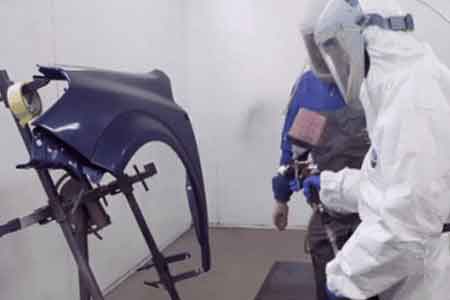
Vehicle Refinish (Paint) Technician Apprenticeship
Vehicle Refinish (Paint) Technician Apprenticeship
A vehicle refinish technician apprenticeship is a training scheme that leads to a career in painting vehicles. Depending on where you work, you could be working on motorcycles, cars, vans, trucks, buses or trailers.
The day-to-day role of a vehicle refinish technician is to prepare, spray paint and finish vehicles, generally after a collision or other accident.
Vehicle refinishing can include everything from spray painting vehicle components or bodywork panels to full vehicle resprays in scenarios where major damage has occurred or when renovating older vehicles to bring them up to a more modern or aesthetically pleasing standard. This job involves masking, sanding and other surface preparation methods; paint composition, mixing and colour matching; spray painting and other finishing techniques, such as using primers, base coats and lacquers; and using modern drying/curing techniques.
The Vehicle Refinish (Paint) Technician Apprenticeship Programme Covers:
- Health & Safety
- Tools & equipment
- Working with others
- Applying fillers & foundation materials
- Preparing metal & pre-painted surfaces
- Repairing paint defects
- Matching colours
- Mixing paint
- Applying & spraying paint

Otherwise known as
- Vehicle Painter
- Vehicle Paint Sprayer
- Vehicle Paint Technician
- Car Paint Technician
- Car Sprayer
- Automotive Spray Painter
- Motor Vehicle Spray Painter
- Vehicle Body Paint Technician
- Vehicle Damage Paint Technician
Frequent Questions
Transport Training Services has an impressive training centre including modern conference facilities; a variety of fully equipped training rooms and computer suites; a vehicle manoeuvring area; vehicle maintenance workshops and a vehicle body repair workshop which houses a paint booth and paint mixing facility.
Take the Virtual Tour:
As with any new career, some basic knowledge of the job or the subject matter is advantageous but not essential.
Whilst having some basic understanding will set you off on a good grounding, the biggest asset you can bring to an apprenticeship is enthusiasm. Having an interest in your chosen career is a must.
As part of your apprenticeship we will teach you everything you need to know, including the basics.
It is of course part of the job to get your hands a bit dirty but today we call professionals that work on vehicles “technicians” rather than “mechanics” or “diesel fitters”. This is partly because, they are now working on huge computers rather than oil and grease ridden machines! And likewise, engines are moving away from petrol and diesel to electric and other fuel types which are much cleaner to deal with.
We can’t promise that you won’t ever get dirty – that’s why you’ll have overalls and other PPE to wear – but the job is certainly getting less and less dirty as technology evolves.
If you compare being a technician to other vocational career choices, it’s no different to a hairdresser getting stained with hair dye, a nurse getting bodily fluids on their hands and clothes or chefs getting covered in food!
Our existing and past female apprentices and the women that work in the transport, logistics and automotive sectors tell us that they are not treated any differently to their male colleagues.
They consistently tell us that they enjoy being part of the team, they are treated fairly and equally and they love the banter that comes with being part of a mixed team!
During your apprenticeship you will be fully supported by both your course tutors and our dedicated Careers Development Officer. Our Careers Development Officer will be with you every step of the way to ensure you are integrating successfully into your workplace and to provide you with regular feedback on your progress. Your Careers Development Officer is also the link between you and your employer and is there to make sure any issues, on either side, are resolved quickly.
If you have any doubts or questions about being a female in the transport or motor industries, join our Facebook group and ask one of our ‘Women in Wheels’ – a group of friendly, inspiring and dedicated women who are either existing apprentices, are recently graduated apprentices or are experienced women working in a range of role across the sectors.
Women in Wheels NI Facebook Group: www.facebook.com/groups/womeninwheelsni
With advances in technology in vehicles, ‘brute strength’ is no longer required for driving or fixing trucks and buses!
Today, automotive technology is moving more towards computers than turning spanners, and because of improving health and safety legislation, there are tools and equipment these days that make these traditionally manual jobs much safer. Heavy lifting is done by machines in most cases.
Automotive technology is all about solving problems as much as it is about the actual fixing and much of the problem-solving these days is done by computer-based diagnostics.
And driving trucks and buses is becoming more and more automated so the days of using muscle to turn a steering wheel on a heavy vehicle are long gone. Today’s drivers are highly skilled.
So, although transport, logistics and automotive are excellent career choices for people who like to use their hands, physical strength is not a pre-requisite.
We know that the transport/logistics and motor sectors have a lot to offer. Aside from the excitement, variety, problem-solving and technology involved, both sectors are in high demand and so provide good long-term job prospects.
The motor industry employs 823,000 people and contributes £18.6 billion to the UK economy.
Due to the highly rural nature of many parts of NI, transport by car is the only viable option for travel and commuting. Without the motor sector we would not have cars that are safe and legal to drive.
The road transport industry employs 2.7 million people and contributes £124 billion to the UK economy.
Everything that comes into or goes out of Northern Ireland travels by road, whether it’s clothes, food, fuel or your online orders, so the career opportunities are vast and diverse.
Transport workers are essential in our everyday lives. The recent covid-19 pandemic showed the importance of transport and logistics and demonstrates that even when the economy dips, transport stays strong and in demand.
1.2m vehicles licensed in NI – all need maintained/repaired
150,000 goods vehicles and 3,400 buses all need drivers
A combination of an ageing workforce, lack of investment in apprentices after the last UK recession, a lack of diversity and the impact of Brexit means our sectors are facing a shortfall of talent across all areas. This means qualified transport and automotive apprentices, once qualified, are in high demand!
Once you enter a career in transport or automotive, there is plenty of opportunity for growth and advancement. Find out about the career path opportunities here.
Apprentices are also crucial in bridging the gap in future technologies in these sectors. TTS apprentices will increasingly bring skills that may be lacking in transport and automotive businesses in Northern Ireland today. We already train apprentices in hybrid and electric vehicle technology and are already looking to the future of hydrogen power, for example.
Additionally, women now account for 35% of registered car keepers in the UK and so are increasingly involved in car buying and servicing decisions. Many women feel more comfortable interacting with and asking questions of female mechanics and service advisors, so employers have a desire to hire more women.
There are no certainties in life and so much is down to the skill and commitment of us all as individuals. However, there are currently significant skill shortages within technical and driving roles in the motor and transport industries, both in Northern Ireland and further afield. Currently there are not enough qualified technicians and professional drivers to meet the demand, which is good news for qualified people because it means there is a high likelihood of job security.
In terms of career progression there are many opportunities for qualified and experienced transport and motor industry professionals. Some advancement opportunities are as follows:
Career Progression Possibilities for Apprentice Technicians:
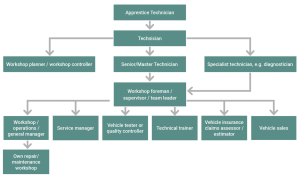
- Workshop foreman / supervisor / team leader
- Workshop / operations / general manager
- Workshop planner / workshop controller
- Service manager
- Vehicle tester or quality controller
- Technical trainer
- Vehicle insurance claims assessor / estimator
- Specialist technician, e.g. diagnostician
- Vehicle sales – it is not uncommon for former technicians to move into sales roles because they have such a good technical understanding
- You could also aspire to open your own repair/maintenance workshop some day
Career Progression Possibilities for Apprentice Drivers:
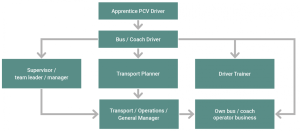
- Specialist vehicle driver, e.g. driving vehicles that transport hazardous/dangerous goods or high value goods
- Supervisor / team leader / manager
- Transport planner
- Transport manager
- Driver trainer
- You could also aspire to start your own transport business some day
Also, because most TTS apprenticeships provide qualifications that are recognised all over the world, you could have the opportunity to live and work abroad after you qualify.
Any career which demands a high level of training and competence will be rewarded with a professional salary to reflect the hard work and effort undertaken to become qualified, and of course the salary earned will be determined by experience and expertise.
Qualified salary expectations vary depending on the role, but all TTS apprenticeships open doors to careers that typically provide earnings between £20-30,000, with more specialist roles commanding much more than this. Heavy vehicle technicians typically earn more than light vehicle technicians, for example, and long-distance drivers typically earn more than drivers on local routes, so there are significant variances even within professions.
The best way to ascertain the salary that you could achieve once you are fully qualified is to search job listings to see what salaries companies in your local area are offering.
The first step is to complete an online application, which can be found here. When we receive and process your application, you will be invited to TTS to participate in a range of aptitude tests. Please note, any candidate under the age of 18 must be accompanied by an adult.
TTS has well-established business partnerships with the main employers in the transport and motor sectors in Northern Ireland. Current partners on the ApprenticeshipsNI programme include a variety of franchise brands including:
We also train apprentices for local franchise dealerships and independent employers and family businesses throughout Northern Ireland, such as:
- Charles Hurst Group
- Diamond Trucks
- Donnelly Group
- Downeys Cars
- Gus Commercials
- McMillan Specialist Cars
- John Mulholland Motors
- NI Trucks
- RK Trucks Centre
- Road Trucks
- Roadside Garages
- Shelbourne Motors
- TBF Thompson
- The Agnew Group
- The Country Garage
- TrustFord
- Wilsons of Rathkenny
- Wrights Accident Repair Centres
This is not an exhaustive list and as you can see covers the entire geography of Northern Ireland. We endeavour, as far as possible, to match apprentices to vacancies in their locality.
TTS is consistently praised for its support of its apprentices. We have a dedicated Careers Development Officer to provide ongoing pastoral care to ensure you are developing well and integrating successfully into your workplace, and to provide you with regular feedback on your progress.
Your Careers Development Officer is also the link between you and your employer and is there to make sure any issues, on either side, are resolved quickly.
Proof of the quality of support available is the large number of employers who themselves came through an apprenticeship with TTS and want a similar, quality experience for the staff they employ.
For some apprenticeships, you may be required to have your own tools, but we wouldn’t recommend making any significant purchases without seeking advice first of all. Your TTS Careers Development Officer can liaise with you and your employer to find out what equipment you will need.
Some employers offer tool allowances or loans to help get you started.
Nothing! Unlike most university courses, there are no fees associated with training during an apprenticeship. On the contrary, apprentices earn a decent wage from day one.
The apprentice minimum wage, which is set by the government and which changes at least every April, depends on:
• Your age
• The year of apprenticeship you are in
For those aged under 19 or those aged 19 or over who are in the first year of their apprenticeship, the minimum apprentice rate applies. If you are 19 or older, and have completed your first year of your apprenticeship, the National Minimum Wage applies for your age group.
You can find out more about legal apprenticeship wages here and national minimum wages here.
Whilst these are the minimum wages set by the government, TTS apprentices are employed by a local company in the motor/transport industry from day one and many of these employers choose to pay more than the minimum legal standard.
Certain types of apprenticeships also tend to command a higher rate. It is important to keep sight of the long-term goal when entering into an apprenticeship though. Transport and motor industry technical and driving professions are in high demand and offer excellent career prospects.
TTS normally starts new apprentices in September, mainly because this fits into the typical school-leaver schedule. The best time to look for an apprenticeship, therefore, is between January and June prior to the September that you wish to commence. Some employers start recruiting as early as Spring so the earlier you apply the more opportunities you will be able to be considered for.
Having said that, we often have demand from employers throughout the year for new apprentices, which we can accommodate because our apprenticeships are modular. This means you could start the apprenticeship later in the term and simply complete the modules in a different order, if we have sufficient numbers for a full class of late starters or spaces to fill on existing classes.
To complete both Level 2 and Level 3 apprenticeships with TTS it will take three years to qualify.
Please note, TTS does not offer Level 2 on its own. At TTS we do not consider our apprentices fully qualified until they have completed Level 3, since this is the expectation of any employer.
Unlike some other apprenticeship providers, you will work for your employer and attend TTS classes all year round. Most employer work experience is five days per week (Monday to Friday), with attendance at TTS in Nutts Corner being approximately one week every two months for training. At TTS, we find this ‘block release’ model to be beneficial compared with other schemes that operate on a weekly day release for college training, because you can get more done in five consecutive days than in five individual days. In our experience, employers also prefer the block release model because they find it easier to plan your workload.
Each apprentice attends our training centre for a unique blend of workshop practical tasks, classroom theory and e-learning. At TTS you will receive a minimum of 50% workshop practical training. Hours of attendance at TTS are 9am to 4pm (Monday-Thursday) and 9am to 3pm (Friday).
All TTS apprenticeships provide nationally recognised qualifications. In technical or customer service roles the awarding body is the Institute of the Motor Industry (IMI) and for driving apprenticeships the qualification is awarded by Pearson. All successfully completed TTS apprenticeships result in an Advanced Level 3 Apprenticeship (with Intermediate Level 2 achieved along the way).
Most of our apprenticeship qualifications are recognised around the world, meaning you will not be restricted to working in the UK in the future.
Where you do not have Maths, English and ICT GCSE at grade C or above before commencing your apprenticeship, you will also be enrolled in “Essential Skills” classes and will achieve Communication Level 2, Numeracy Level 2 and ICT Level 1 by the end of your apprenticeship.
Aside from the recognised qualifications you will also gain a number of valuable practical skills throughout your training.
According to the Institute of the Motor Industry (IMI) an apprenticeship is “a work-based training programme that provides the learner with practical skills through on-the-job training combined with theoretical knowledge through off-the-job learning”.
A TTS apprenticeship is a three-year employment opportunity which provides paid work experience and nationally recognised qualifications.
Transport Training Services is a social enterprise focusing on apprenticeships and career development training specifically for the retail motor trade and transport industry in Northern Ireland. Backed by over 50 years’ experience as a leading, recognised transport training service provider, our advice is sought after and trusted around the UK and Ireland. As a wholly owned subsidiary of the registered charity, Transport Training Board for Northern Ireland, TTS has a genuine, longstanding interest in promoting apprenticeships to young people in Northern Ireland to secure the future workforce of these sectors. We aim to support local employers to fill skills shortages that currently exist within the labour market.
You must understand from the outset that, by accepting an apprentice, you are making at least a three-year commitment to employ him/her. There is also an expectation that you will retain the apprentice post-qualification. In our experience, it is rare for an employer to let an apprentice go after the three years, because when an apprentice becomes fully qualified this is when he/she become most valuable to an employer.
Employers will generally show preference for candidates with GCSE passes (grade C or above) including Maths, English and ICT. This is because each role in the motor or transport industry will require these skills in everyday life. For example, a bus driver will inevitably need to take payments from customers (using Maths skills), someone working in a customer service role will need to be able to communicate articulately with customers via email (using English skills) and technicians work with English, Maths and ICT on a daily basis when, for example, reading and interpreting manufacturer technical data, calculating gear ratios and wheel alignment angles, or when carrying out vehicle diagnostics using computers.
If you do not have the required GCSE qualifications, these subjects must be covered under “Essential Skills” classes which you would take alongside your other learning. The advantage of taking Essential Skills via TTS alongside your chosen apprenticeship course is that we try to teach these classes putting the learning in the context of the job you are training to do. This can help you to understand the importance of the subjects because there is more relevance to your chosen career path.
Whilst it is important to have some qualifications to set you off on a good grounding, the biggest asset you can bring to an apprenticeship is enthusiasm. Having an interest in your chosen career is a must.
As part of the application process, each TTS apprenticeship applicant will be assessed using a range of diagnostic tests, including:
- Literacy (English)
- Numeracy (Maths)
- Mechanical aptitude (your ability to understand and apply mechanical concepts and principles to solve problems); and
- Cognitive reasoning (your ability to understand, process, remember and apply the information you will learn)
If you are applying for a driving apprenticeship, you have a better chance of becoming an employed apprentice if you have a full and clean car driving licence.
TTS apprenticeships are funded by the Department for the Economy. In September 2023, the Department for the Economy launched ‘All Age Apprenticeships’ which lifted the age restriction to allow anyone to apply for an apprenticeship.
The apprentice minimum wage, which is set by the government and which changes at least every April, depends on:
• Your age
• The year of apprenticeship you are in
For those aged under 19 or those aged 19 or over who are in the first year of their apprenticeship, the minimum apprentice rate applies. If you are 19 or older, and have completed your first year of your apprenticeship, the National Minimum Wage applies for your age group.
You can find out more about legal apprenticeship wages here and national minimum wages here.
Whilst these are the minimum wages set by the government, TTS apprentices are employed by a local company in the motor/transport industry from day one and many of these employers choose to pay more than the minimum legal standard.
Certain types of apprenticeships also tend to command a higher rate. It is important to keep sight of the long-term goal when entering into an apprenticeship though. Transport and motor industry technical and driving professions are in high demand and offer excellent career prospects.
While many apprenticeship candidates are able to find their own employer, others use our matching service that brings potential new recruits together with employers that have suitable vacancies.
If you are fortunate enough to have a pre-existing connection to an employer that is seeking an apprentice, we can help to set up the apprenticeship to support both you and the employer. If it not an employer that we have worked with before, we will need to carry out some basic quality checks, such as the employer’s workshop facilities, insurance and health and safety procedures.
At TTS we really want to support those that show an ability and/or ambition to have a career in the automotive or transport industry. While we cannot promise that we will be able to match you with an employer, we have a large network of contacts that we can put you in touch with. We work with a range of vehicle manufacturers and local companies that employ apprentices that we can signpost you to and we can help you with CV writing and interview preparation to give you the best chance at securing a position.
All TTS apprentices are on the payroll of their apprentice employer for the duration of the apprenticeship. Being employed from day one generally means there is greater investment from the employer to make the apprenticeship successful.
According to the Institute of the Motor Industry (IMI) an apprenticeship is “a work-based training programme that provides the learner with practical skills through on-the-job training combined with theoretical knowledge through off-the-job learning”.
A TTS apprenticeship is a three-year employment opportunity which provides paid work experience and nationally recognised qualifications.
By embarking on an apprentice, you are generally making at least a three-year investment in your future career, but in our experience, it is rare for an employer to let an apprentice go after the three years, because when an apprentice becomes fully qualified this is when he/she become most valuable to an employer.
To give you an idea what to expect from an apprenticeship at TTS, you can check out some videos of what our existing and past apprentices have to say. Click here to watch the videos.
Apprenticeship Application
Ignite your career with a motor industry apprenticeship. Click the button below to apply.
View all apprenticeships
TTS offers a wide range of apprenticeships to suit all needs so we are sure to have something to suit you.
Remember we are always here to help so don’t hesitate to get in touch with any question or query.
.

Vehicle Body Repair Technician Apprenticeship
Vehicle Body Repair Technician Apprenticeship
A vehicle body repair technician apprenticeship is a training scheme that leads to a career in rectifying damage to vehicles. Depending on where you work, you could be working on damaged motorcycles, cars, vans, trucks, buses or trailers.
The day-to-day role of a vehicle body repair technician includes repairing everything from small vehicle components or bodywork damages to complex vehicle rebuilds in scenarios where major structural damage has occurred. Some vehicle body repair technicians also work on refurbishing vehicles, which involves renovating older vehicles to bring them up to a more modern or aesthetically pleasing standard. This job mainly involves metalworking, welding and other finishing techniques.
The Vehicle Body Repair Technician Apprenticeship Programme Covers:
- Health & Safety
- Tools & equipment
- Working with others
- Removing & replacing panels
- Panel repair
- Chassis repair
- Spot & MIG welding
- Body adhesive bonding
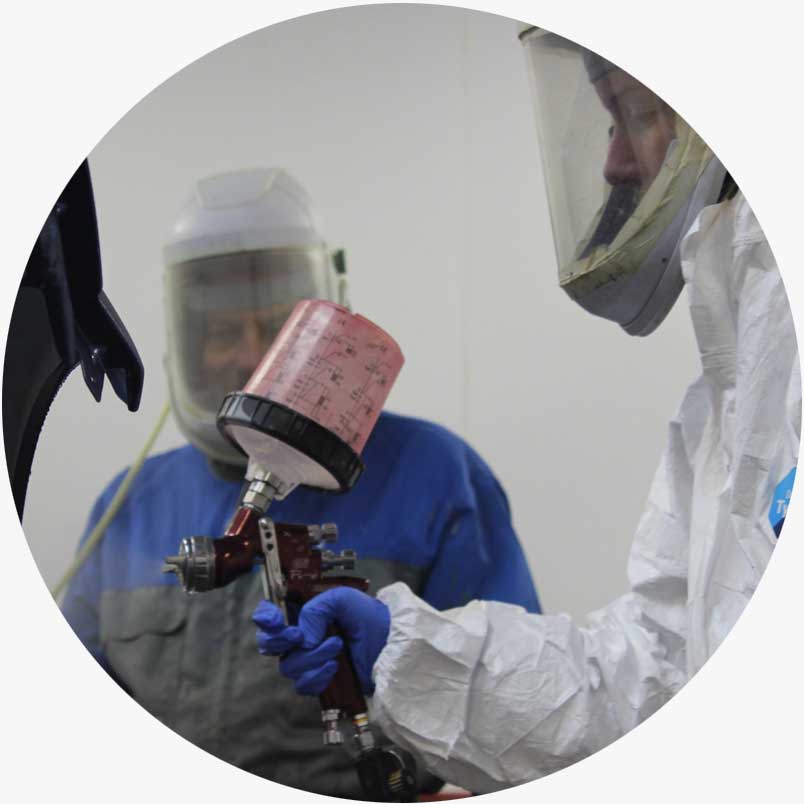
Otherwise known as
- Vehicle Fitter
- Accident Repair Technician
- Bodyshop Technician
- Panel Beater
Frequent Questions
Transport Training Services has an impressive training centre including modern conference facilities; a variety of fully equipped training rooms and computer suites; a vehicle manoeuvring area; vehicle maintenance workshops and a vehicle body repair workshop which houses a paint booth and paint mixing facility.
Take the Virtual Tour:
As with any new career, some basic knowledge of the job or the subject matter is advantageous but not essential.
Whilst having some basic understanding will set you off on a good grounding, the biggest asset you can bring to an apprenticeship is enthusiasm. Having an interest in your chosen career is a must.
As part of your apprenticeship we will teach you everything you need to know, including the basics.
It is of course part of the job to get your hands a bit dirty but today we call professionals that work on vehicles “technicians” rather than “mechanics” or “diesel fitters”. This is partly because, they are now working on huge computers rather than oil and grease ridden machines! And likewise, engines are moving away from petrol and diesel to electric and other fuel types which are much cleaner to deal with.
We can’t promise that you won’t ever get dirty – that’s why you’ll have overalls and other PPE to wear – but the job is certainly getting less and less dirty as technology evolves.
If you compare being a technician to other vocational career choices, it’s no different to a hairdresser getting stained with hair dye, a nurse getting bodily fluids on their hands and clothes or chefs getting covered in food!
Our existing and past female apprentices and the women that work in the transport, logistics and automotive sectors tell us that they are not treated any differently to their male colleagues.
They consistently tell us that they enjoy being part of the team, they are treated fairly and equally and they love the banter that comes with being part of a mixed team!
During your apprenticeship you will be fully supported by both your course tutors and our dedicated Careers Development Officer. Our Careers Development Officer will be with you every step of the way to ensure you are integrating successfully into your workplace and to provide you with regular feedback on your progress. Your Careers Development Officer is also the link between you and your employer and is there to make sure any issues, on either side, are resolved quickly.
If you have any doubts or questions about being a female in the transport or motor industries, join our Facebook group and ask one of our ‘Women in Wheels’ – a group of friendly, inspiring and dedicated women who are either existing apprentices, are recently graduated apprentices or are experienced women working in a range of role across the sectors.
Women in Wheels NI Facebook Group: www.facebook.com/groups/womeninwheelsni
With advances in technology in vehicles, ‘brute strength’ is no longer required for driving or fixing trucks and buses!
Today, automotive technology is moving more towards computers than turning spanners, and because of improving health and safety legislation, there are tools and equipment these days that make these traditionally manual jobs much safer. Heavy lifting is done by machines in most cases.
Automotive technology is all about solving problems as much as it is about the actual fixing and much of the problem-solving these days is done by computer-based diagnostics.
And driving trucks and buses is becoming more and more automated so the days of using muscle to turn a steering wheel on a heavy vehicle are long gone. Today’s drivers are highly skilled.
So, although transport, logistics and automotive are excellent career choices for people who like to use their hands, physical strength is not a pre-requisite.
We know that the transport/logistics and motor sectors have a lot to offer. Aside from the excitement, variety, problem-solving and technology involved, both sectors are in high demand and so provide good long-term job prospects.
The motor industry employs 823,000 people and contributes £18.6 billion to the UK economy.
Due to the highly rural nature of many parts of NI, transport by car is the only viable option for travel and commuting. Without the motor sector we would not have cars that are safe and legal to drive.
The road transport industry employs 2.7 million people and contributes £124 billion to the UK economy.
Everything that comes into or goes out of Northern Ireland travels by road, whether it’s clothes, food, fuel or your online orders, so the career opportunities are vast and diverse.
Transport workers are essential in our everyday lives. The recent covid-19 pandemic showed the importance of transport and logistics and demonstrates that even when the economy dips, transport stays strong and in demand.
1.2m vehicles licensed in NI – all need maintained/repaired
150,000 goods vehicles and 3,400 buses all need drivers
A combination of an ageing workforce, lack of investment in apprentices after the last UK recession, a lack of diversity and the impact of Brexit means our sectors are facing a shortfall of talent across all areas. This means qualified transport and automotive apprentices, once qualified, are in high demand!
Once you enter a career in transport or automotive, there is plenty of opportunity for growth and advancement. Find out about the career path opportunities here.
Apprentices are also crucial in bridging the gap in future technologies in these sectors. TTS apprentices will increasingly bring skills that may be lacking in transport and automotive businesses in Northern Ireland today. We already train apprentices in hybrid and electric vehicle technology and are already looking to the future of hydrogen power, for example.
Additionally, women now account for 35% of registered car keepers in the UK and so are increasingly involved in car buying and servicing decisions. Many women feel more comfortable interacting with and asking questions of female mechanics and service advisors, so employers have a desire to hire more women.
There are no certainties in life and so much is down to the skill and commitment of us all as individuals. However, there are currently significant skill shortages within technical and driving roles in the motor and transport industries, both in Northern Ireland and further afield. Currently there are not enough qualified technicians and professional drivers to meet the demand, which is good news for qualified people because it means there is a high likelihood of job security.
In terms of career progression there are many opportunities for qualified and experienced transport and motor industry professionals. Some advancement opportunities are as follows:
Career Progression Possibilities for Apprentice Technicians:
- Workshop foreman / supervisor / team leader
- Workshop / operations / general manager
- Workshop planner / workshop controller
- Service manager
- Vehicle tester or quality controller
- Technical trainer
- Vehicle insurance claims assessor / estimator
- Specialist technician, e.g. diagnostician
- Vehicle sales – it is not uncommon for former technicians to move into sales roles because they have such a good technical understanding
- You could also aspire to open your own repair/maintenance workshop some day
Career Progression Possibilities for Apprentice Drivers:
- Specialist vehicle driver, e.g. driving vehicles that transport hazardous/dangerous goods or high value goods
- Supervisor / team leader / manager
- Transport planner
- Transport manager
- Driver trainer
- You could also aspire to start your own transport business some day
Also, because most TTS apprenticeships provide qualifications that are recognised all over the world, you could have the opportunity to live and work abroad after you qualify.
Any career which demands a high level of training and competence will be rewarded with a professional salary to reflect the hard work and effort undertaken to become qualified, and of course the salary earned will be determined by experience and expertise.
Qualified salary expectations vary depending on the role, but all TTS apprenticeships open doors to careers that typically provide earnings between £20-30,000, with more specialist roles commanding much more than this. Heavy vehicle technicians typically earn more than light vehicle technicians, for example, and long-distance drivers typically earn more than drivers on local routes, so there are significant variances even within professions.
The best way to ascertain the salary that you could achieve once you are fully qualified is to search job listings to see what salaries companies in your local area are offering.
The first step is to complete an online application, which can be found here. When we receive and process your application, you will be invited to TTS to participate in a range of aptitude tests. Please note, any candidate under the age of 18 must be accompanied by an adult.
TTS has well-established business partnerships with the main employers in the transport and motor sectors in Northern Ireland. Current partners on the ApprenticeshipsNI programme include a variety of franchise brands including:
We also train apprentices for local franchise dealerships and independent employers and family businesses throughout Northern Ireland, such as:
- Charles Hurst Group
- Diamond Trucks
- Donnelly Group
- Downeys Cars
- Gus Commercials
- McMillan Specialist Cars
- John Mulholland Motors
- NI Trucks
- RK Trucks Centre
- Road Trucks
- Roadside Garages
- Shelbourne Motors
- TBF Thompson
- The Agnew Group
- The Country Garage
- TrustFord
- Wilsons of Rathkenny
- Wrights Accident Repair Centres
This is not an exhaustive list and as you can see covers the entire geography of Northern Ireland. We endeavour, as far as possible, to match apprentices to vacancies in their locality.
TTS is consistently praised for its support of its apprentices. We have a dedicated Careers Development Officer to provide ongoing pastoral care to ensure you are developing well and integrating successfully into your workplace, and to provide you with regular feedback on your progress.
Your Careers Development Officer is also the link between you and your employer and is there to make sure any issues, on either side, are resolved quickly.
Proof of the quality of support available is the large number of employers who themselves came through an apprenticeship with TTS and want a similar, quality experience for the staff they employ.
For some apprenticeships, you may be required to have your own tools, but we wouldn’t recommend making any significant purchases without seeking advice first of all. Your TTS Careers Development Officer can liaise with you and your employer to find out what equipment you will need.
Some employers offer tool allowances or loans to help get you started.
Nothing! Unlike most university courses, there are no fees associated with training during an apprenticeship. On the contrary, apprentices earn a decent wage from day one.
The apprentice minimum wage, which is set by the government and which changes at least every April, depends on:
• Your age
• The year of apprenticeship you are in
For those aged under 19 or those aged 19 or over who are in the first year of their apprenticeship, the minimum apprentice rate applies. If you are 19 or older, and have completed your first year of your apprenticeship, the National Minimum Wage applies for your age group.
You can find out more about legal apprenticeship wages here and national minimum wages here.
Whilst these are the minimum wages set by the government, TTS apprentices are employed by a local company in the motor/transport industry from day one and many of these employers choose to pay more than the minimum legal standard.
Certain types of apprenticeships also tend to command a higher rate. It is important to keep sight of the long-term goal when entering into an apprenticeship though. Transport and motor industry technical and driving professions are in high demand and offer excellent career prospects.
TTS normally starts new apprentices in September, mainly because this fits into the typical school-leaver schedule. The best time to look for an apprenticeship, therefore, is between January and June prior to the September that you wish to commence. Some employers start recruiting as early as Spring so the earlier you apply the more opportunities you will be able to be considered for.
Having said that, we often have demand from employers throughout the year for new apprentices, which we can accommodate because our apprenticeships are modular. This means you could start the apprenticeship later in the term and simply complete the modules in a different order, if we have sufficient numbers for a full class of late starters or spaces to fill on existing classes.
To complete both Level 2 and Level 3 apprenticeships with TTS it will take three years to qualify.
Please note, TTS does not offer Level 2 on its own. At TTS we do not consider our apprentices fully qualified until they have completed Level 3, since this is the expectation of any employer.
Unlike some other apprenticeship providers, you will work for your employer and attend TTS classes all year round. Most employer work experience is five days per week (Monday to Friday), with attendance at TTS in Nutts Corner being approximately one week every two months for training. At TTS, we find this ‘block release’ model to be beneficial compared with other schemes that operate on a weekly day release for college training, because you can get more done in five consecutive days than in five individual days. In our experience, employers also prefer the block release model because they find it easier to plan your workload.
Each apprentice attends our training centre for a unique blend of workshop practical tasks, classroom theory and e-learning. At TTS you will receive a minimum of 50% workshop practical training. Hours of attendance at TTS are 9am to 4pm (Monday-Thursday) and 9am to 3pm (Friday).
All TTS apprenticeships provide nationally recognised qualifications. In technical or customer service roles the awarding body is the Institute of the Motor Industry (IMI) and for driving apprenticeships the qualification is awarded by Pearson. All successfully completed TTS apprenticeships result in an Advanced Level 3 Apprenticeship (with Intermediate Level 2 achieved along the way).
Most of our apprenticeship qualifications are recognised around the world, meaning you will not be restricted to working in the UK in the future.
Where you do not have Maths, English and ICT GCSE at grade C or above before commencing your apprenticeship, you will also be enrolled in “Essential Skills” classes and will achieve Communication Level 2, Numeracy Level 2 and ICT Level 1 by the end of your apprenticeship.
Aside from the recognised qualifications you will also gain a number of valuable practical skills throughout your training.
According to the Institute of the Motor Industry (IMI) an apprenticeship is “a work-based training programme that provides the learner with practical skills through on-the-job training combined with theoretical knowledge through off-the-job learning”.
A TTS apprenticeship is a three-year employment opportunity which provides paid work experience and nationally recognised qualifications.
Transport Training Services is a social enterprise focusing on apprenticeships and career development training specifically for the retail motor trade and transport industry in Northern Ireland. Backed by over 50 years’ experience as a leading, recognised transport training service provider, our advice is sought after and trusted around the UK and Ireland. As a wholly owned subsidiary of the registered charity, Transport Training Board for Northern Ireland, TTS has a genuine, longstanding interest in promoting apprenticeships to young people in Northern Ireland to secure the future workforce of these sectors. We aim to support local employers to fill skills shortages that currently exist within the labour market.
You must understand from the outset that, by accepting an apprentice, you are making at least a three-year commitment to employ him/her. There is also an expectation that you will retain the apprentice post-qualification. In our experience, it is rare for an employer to let an apprentice go after the three years, because when an apprentice becomes fully qualified this is when he/she become most valuable to an employer.
Employers will generally show preference for candidates with GCSE passes (grade C or above) including Maths, English and ICT. This is because each role in the motor or transport industry will require these skills in everyday life. For example, a bus driver will inevitably need to take payments from customers (using Maths skills), someone working in a customer service role will need to be able to communicate articulately with customers via email (using English skills) and technicians work with English, Maths and ICT on a daily basis when, for example, reading and interpreting manufacturer technical data, calculating gear ratios and wheel alignment angles, or when carrying out vehicle diagnostics using computers.
If you do not have the required GCSE qualifications, these subjects must be covered under “Essential Skills” classes which you would take alongside your other learning. The advantage of taking Essential Skills via TTS alongside your chosen apprenticeship course is that we try to teach these classes putting the learning in the context of the job you are training to do. This can help you to understand the importance of the subjects because there is more relevance to your chosen career path.
Whilst it is important to have some qualifications to set you off on a good grounding, the biggest asset you can bring to an apprenticeship is enthusiasm. Having an interest in your chosen career is a must.
As part of the application process, each TTS apprenticeship applicant will be assessed using a range of diagnostic tests, including:
- Literacy (English)
- Numeracy (Maths)
- Mechanical aptitude (your ability to understand and apply mechanical concepts and principles to solve problems); and
- Cognitive reasoning (your ability to understand, process, remember and apply the information you will learn)
If you are applying for a driving apprenticeship, you have a better chance of becoming an employed apprentice if you have a full and clean car driving licence.
TTS apprenticeships are funded by the Department for the Economy. In September 2023, the Department for the Economy launched ‘All Age Apprenticeships’ which lifted the age restriction to allow anyone to apply for an apprenticeship.
The apprentice minimum wage, which is set by the government and which changes at least every April, depends on:
• Your age
• The year of apprenticeship you are in
For those aged under 19 or those aged 19 or over who are in the first year of their apprenticeship, the minimum apprentice rate applies. If you are 19 or older, and have completed your first year of your apprenticeship, the National Minimum Wage applies for your age group.
You can find out more about legal apprenticeship wages here and national minimum wages here.
Whilst these are the minimum wages set by the government, TTS apprentices are employed by a local company in the motor/transport industry from day one and many of these employers choose to pay more than the minimum legal standard.
Certain types of apprenticeships also tend to command a higher rate. It is important to keep sight of the long-term goal when entering into an apprenticeship though. Transport and motor industry technical and driving professions are in high demand and offer excellent career prospects.
While many apprenticeship candidates are able to find their own employer, others use our matching service that brings potential new recruits together with employers that have suitable vacancies.
If you are fortunate enough to have a pre-existing connection to an employer that is seeking an apprentice, we can help to set up the apprenticeship to support both you and the employer. If it not an employer that we have worked with before, we will need to carry out some basic quality checks, such as the employer’s workshop facilities, insurance and health and safety procedures.
At TTS we really want to support those that show an ability and/or ambition to have a career in the automotive or transport industry. While we cannot promise that we will be able to match you with an employer, we have a large network of contacts that we can put you in touch with. We work with a range of vehicle manufacturers and local companies that employ apprentices that we can signpost you to and we can help you with CV writing and interview preparation to give you the best chance at securing a position.
All TTS apprentices are on the payroll of their apprentice employer for the duration of the apprenticeship. Being employed from day one generally means there is greater investment from the employer to make the apprenticeship successful.
According to the Institute of the Motor Industry (IMI) an apprenticeship is “a work-based training programme that provides the learner with practical skills through on-the-job training combined with theoretical knowledge through off-the-job learning”.
A TTS apprenticeship is a three-year employment opportunity which provides paid work experience and nationally recognised qualifications.
By embarking on an apprentice, you are generally making at least a three-year investment in your future career, but in our experience, it is rare for an employer to let an apprentice go after the three years, because when an apprentice becomes fully qualified this is when he/she become most valuable to an employer.
To give you an idea what to expect from an apprenticeship at TTS, you can check out some videos of what our existing and past apprentices have to say. Click here to watch the videos.
Apprenticeship Application
Ignite your career with a motor industry apprenticeship. Click the button below to apply.
View all apprenticeships
TTS offers a wide range of apprenticeships to suit all needs so we are sure to have something to suit you.
Remember we are always here to help so don’t hesitate to get in touch with any question or query.
.